
What is PCB Assembly? A Comprehensive Guide
PCB assembly, called printed circuit board assembly. You go from just a bare PCB — i.e. trust me, it’s basically just a board with copper tracks, no components — to it being a fully-fledged device with electronic gubbins stuffed on. PCBs are the backbone of nearly every modern electronic device — from smartphones and laptops to cars and medical equipment. This article looks at PCB assembly, the steps involved in the process, and why it is important in today’s world.
Understanding PCB Assembly
PCBA (Printed Circuit Board Assembly) is the formation of a working circuit from soldered electronic components on a pre-manufactured PCB. Is a PCB itself only a component? Yes, that PCB is a substrate (typically fiberglass or some sort of flexible, insulating material) with copper traces etched into it. When the components are attached, these traces are the routes that enable the electrical signals to pass through.
A PCB does not become a printed circuit board until the assembly process is completed. The assembly process involves combining various components such as resistors, capacitors, diodes, and ICs to produce an operational electronic device.
Components of a PCB
PCB Components What Are PCB Components To understand PCB assembly, it is important to know the components that make a PCB. These include:
Resistors: Components that limit the passage of electrical flow.
Capacitors – store and discharge electric energy as needed.
This is only the case for diodesDiodesDiodes: Block current from moving in one direction, granting permission for the current to move in the other.
Transistors: Allow for the amplification or switch on of electronic signals.
Dynamically substantial process An execution of specialized operations.
Connectors: Make sure to attach any external devices that can be connected with the PCB.
The copper traces on the board allow these components to communicate with one another and create a working circuit once assembled.
Importance of PCB Assembly for Electronics
Today’s Electronic Device and their PCB Assemble It enables the scaling, miniaturization and efficiency of our everyday electronics. For example:
Compact design: As you have a more organized and mounted components in PCB assembly, you can miniaturize your device and make it portable and compact.
Reliability: Well-assembled electronic devices work for years with infrequent to no failure rates.
Scalability: PCB fabrication methods allow the production of countless identical circuits that are relied upon in consumer electronics, medical devices, automotive applications, etc.
Without PCB assembly, it is not possible to achieve reliable and high-performing electronic devices in mass production.
PBS Services The Stage of PCB Assembly Process
The PCB assembly process usually has a number of delicate steps in which each step matters to create a stellar final product that operates perfectly. The steps outlined below illustrate the overall process, but exact material and parts may vary, depending on the complexity of the design:
Solder Paste Application
This is done by first applying solder paste to the pads for the components. Solder paste is a cream made up of small balls of metal (solder) suspended in flux that gives excellent adhesion of the components to PCB.
Solder paste needs to be printed onto the surface mount pads using a stencil.
Component Placement
You apply solder with a stencil then place components fine on the board. This is generally aided by automating machinery called Pick-and-Place — machines. These machines use robotic arms to position the components very accurately on the PCB.
Still, almost all the rest of the components used in this step are SMT components and they are soldered on the PCB surface without the use of through-hole leads because they are less bulky.
Soldering
After all these elements are soldered into position, the board is soldered, so that these elements are fixed permanently:
Reflow soldering: In SMT printed circuit board assemblies, the PCB is getting heat according to the reflow oven process. To melt solder paste on the warm up, and cool down to form solid joints between components and PCB.
Wave soldering: The PCB is then passed over a wave with molten solder for through-hole components, ensuring the leads or pins are appropriately attached to the board.
Inspection and Testing
After soldering, the assembled PCB is subjected to a thorough inspection process to ensure that every component has been placed and soldered correctly. The are several methods of inspection:
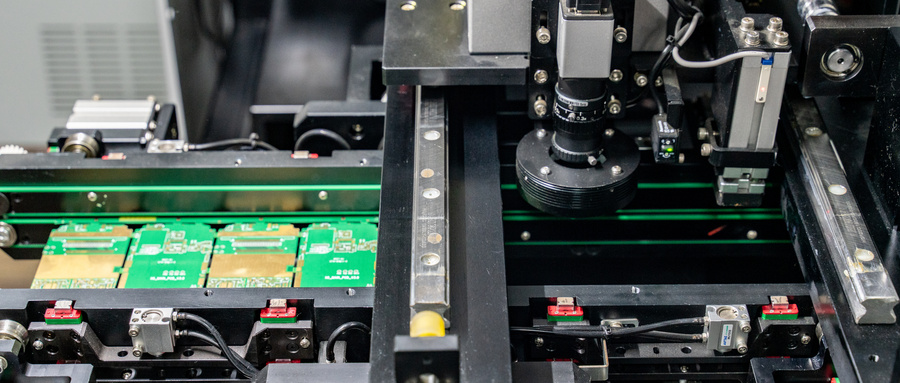
Automated Optical Inspection (AOI): In this stage, high-speed cameras search the board for visual defects, for instance, misaligned components or incomplete solder joints.
X-Ray Inspection: Related to advanced PCB board inspection, as it allows you to view obscured joints under BGA components.
Lumtiple: If the mirroring by level table is not accurate based on time, mirroring is attempted.
After inspection, functional testing can be conducted to confirm that the finished and assembled PCB is working according to specifications. We train it ahead of time, this makes it ready for its specific use,
Repair and Rework
Repair or rework the board if find any defect or error during inspection. This could be re-soldering, replacing bad components or alignment.
Final Assembly and Packaging
After passing all the tests, the board is debugged, the fully-assembled PCB now goes to final assembly, in which it’s integrated into the actual device, such as a PC or smartphone. It is then wrapped and prepared for shipment.
Types of PCB Assembly Services
There are different kinds of PCB assembly services to suit different projects:
Prototype PCB Assembly: This is used for low volume and checking if a new design works before manufacturing occurs in bulk.
High-Volume PCB Assembly: It is used for mass production of consumer electronics, automotive electronics, Industrial equipment.
Turnkey PCB Assembly Definition: A one-stop solution where the manufacturer handles every step from PCB fabrication to component sourcing and assembly.
Box Build Assembly: This not only includes PCB assembly but also includes the final assembly of the product along with its packaging.
Types of Technologies Used For PCB Assembly
Two prime techniques help broadly classify PCB ( Printed circuit board) assembly.
Surface Mount Technology also known by SMT is the other soldering method the most popular one as it mounts the components directly into the surface of the PCB. – It enables small architectures and quick, automated assembly.
THR (Through-Hole Technology): The THT components are place inside the holes of the PCB and soldered on the backside. THT = through-hole technology: for stronger mechanical connections in components like connectors.
Challenges in PCB Assembly
However, that the technological advancement have developed, not all the challenges in PCB assembly are well taken care.
• High Component Density: The need for devices to become smaller in size leads to adding more components on a smaller PCB which increases assembly complexity.
Thermal Management: Heat produced during the working of the components has to be done instantly; otherwise, it can damage the components.
Component Supply: They Also Need to Be Able to Get Quality Components on Time, Even When Global Supply chain Outages Happen
Manufacturers face all of these challenges but have advanced technology and strict quality control measures as well as a strong supplier network to overcome these hurdles.
So PCB assembly has become a very crucial step in the process.
The recent advancement in technology is boosting the PCB assembly world significantly. From flex, rigid-flex to hybrid PCBs, the advances are stewarding the future of electronics. Furthermore, the expanding demand for IoT (Internet of Things) as well as the rising requirement for more intelligent devices offer many different new challenges and possibilities in the PCB assembly.
Even with the ongoing and relentless pursuit of innovation, PCB assembly will always be the backbone of reaching the future demands of the newer generations of larger, faster, and more efficient electronics.
Final Thoughts
The next article will guide you through the steps of what exactly is PCB assembly along with its different parts PCB Assembly Process It takes the most basic of computer components—bare PCBs—and produces powerful, fully-working devices that form the backbone behind the technology we interact with every day. It is used for a number of different stages, including solder paste application, component placement, soldering, inspection, and testing, all of which require precision and skill, from prototyping through to mass production.
Getting Down With PCB Assembly Process If you are an electronics graduate, electrical engineer or an entrepreneur, or manufacturers — you must know the basics of the PCB assembly in the current fast-paced technology world.